The Hack is an educational trail and restoration site managed by Delaware Wild Lands (DWL), Delaware’s oldest and largest non-profit land conservation group. Located in DWL’s Taylors Bridge Land Complex and just outside the DWL Main Office in Odessa, Delaware, The Hack is named in honor of former DWL Executive Director Kate Hackett for her dedication to the organization. On display at the site are the very same conservation qualities that Kate championed at DWL: Engagement with the local community, collaboration with conservation partners, restoration of native forest and meadow habitat, support for ecosystem services, and blending working and natural landscapes that can coexist to benefit wildlife, the environment, and the local community.
The Hack will forever serve as a tribute to DWL and Kate Hackett’s efforts to protect and restore natural areas, and this project was only possible through the generous support from the following funders:
The Tree for Every Delawarean Initiative (TEDI), offered by the DNREC Division of Climate, Coastal and Energy and the Urban and Community Forestry programs in the Department of Agriculture’s Delaware Forest Service
The Nonpoint Source Program, offered by DNREC and the Environmental Protection Agency
The Sustainable Communities Grant Program, offered by the Delaware Nature Society and Delmarva Power
The Chichester duPont Foundation
Carrie Lingo
And many thanks go to the volunteers who planted the trees, shrubs, and wild flowers that you see before you. We couldn’t have done this without you!
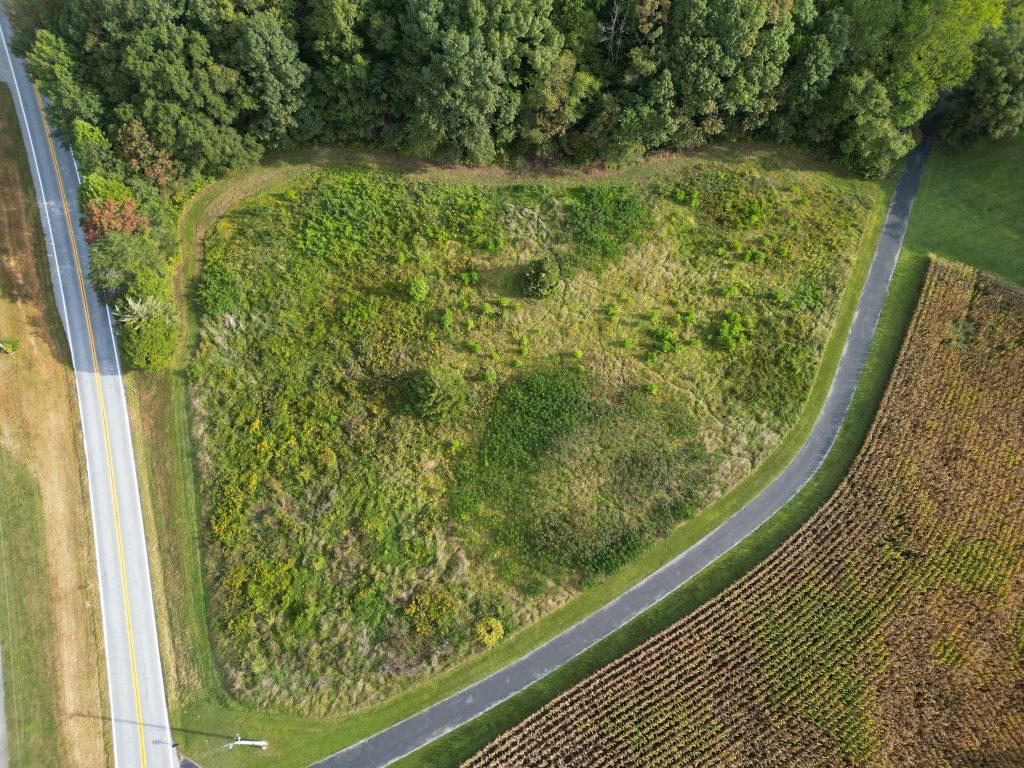
In 2023, the area that was to become The Hack hosted some invasive species and lacked the diversity needed to offer high quality wildlife habitat. Note the two eastern red cedars (Juniperus virginiana) in the middle of the site. Cedars can offer important winter cover and forage for many species of birds and small mammals, so these two indivudals were saved for inclusion in The Hack.
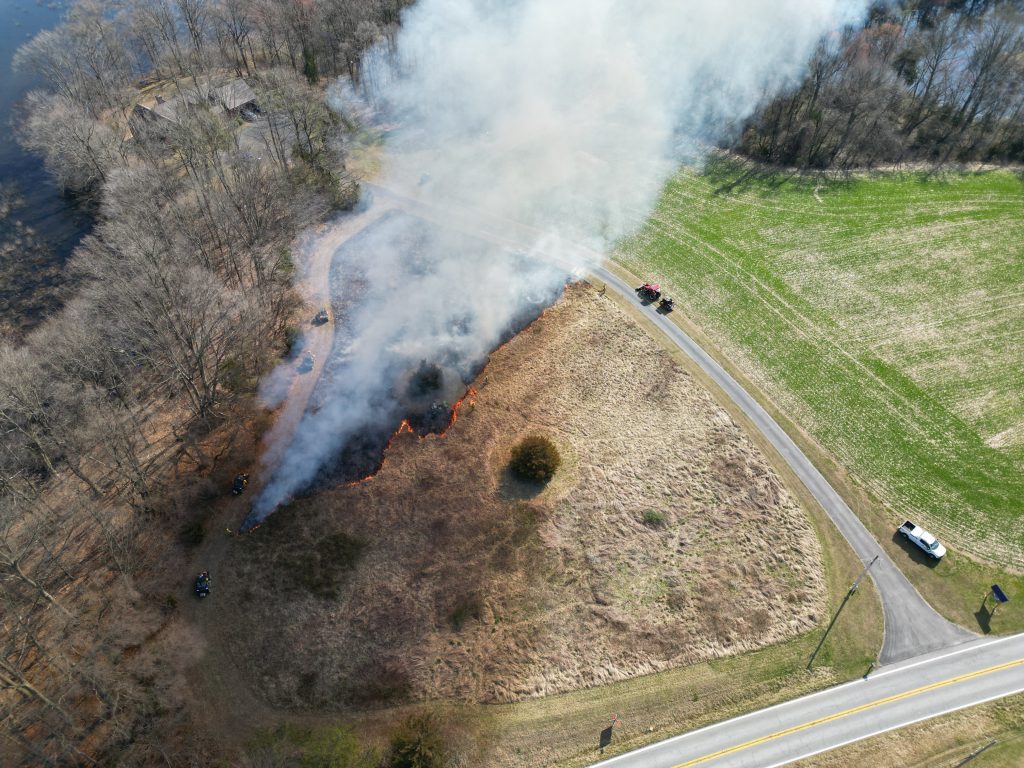
In 2024, DWL used prescribed fire to prepare the site for planting. Fire offers ecological benefits and is used to suppress invasive species, promote growth of native species, and support nutrient cycling. Looking forward, DWL will continue to use prescribed fire to manage the meadow area in The Hack.
We invite you to explore the site and the materials below to learn about the natural environment that surrounds you!
Trees you will see in The Hack:
Northern Red Oak (Quercus rubra)
White Oak (Quercusalba)
Persimmon (Diospyros virginiana)
Pignut Hickory (Caryaglabra)
Willow Oak (Quercus phellos)
Eastern Shadbush (Amelanchier canadensis)
Tulip Poplar (Liriodendron tulipifera)
Sycamore (Platanus occidentalis)
Washington Hawthorn (Crataegus phaenopyrum)
Native plants in The Hack’s meadow habitat:
Hackberry (Celtis occidentalis)
Purple Joe-Pye Weed (Eutrochium purpureum)
Witch Hazel (Hamamelis virginiana)
Winterberry Holly (Ilex verticillata)
Blue-flag Iris (Iris versicolor)
Spicebush (Lindera benzoin)
Blue Lobelia (Lobelia siphilitica)
Deertongue (Dichanthelium clandestinum)
Foxglove Beardtongue (Penstemon digitalis)
Virginia Mountain Mint (Pycnanthemum virginianum)
Orange Coneflower (Rudbeckia fulgida)
Gray Goldenrod (Solidago nemoralis)
Lowbush Blueberry (Vaccinium angustifolium)
Highbush Blueberry (Vaccinium corymbosum)
Wingstem (Verbesina alternifolia)
Arrowwood (Viburnum dentatum)
Golden Alexander (Zizia aurea)
For more information about DWL’s restoration projects, events, and news, please visit us on Facebook and Instagram.
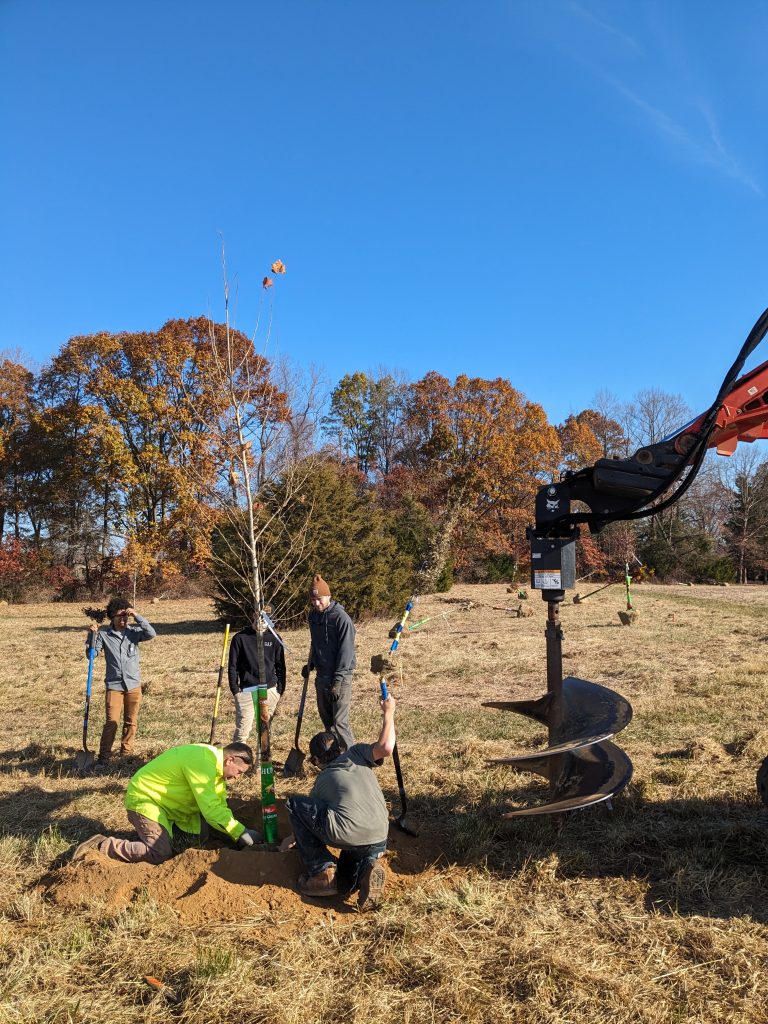
Nine species of native trees were planted in The Hack. These trees are all found in the surrounding forests in Taylors Bridge and will boost the quality of wildlife habitat offered at the site. Special thanks go to A-1 Kevin’s Landscaping in Smyrna for planting these trees.
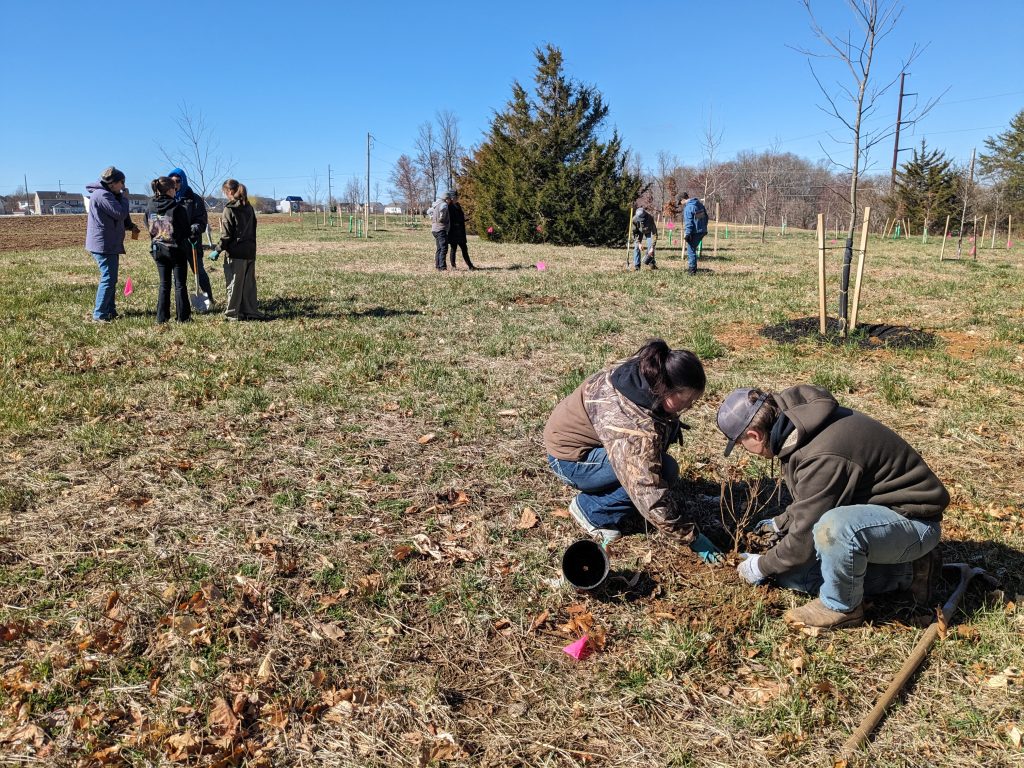
Additional trees and shrubs were planted in the Hack by volunteers from Smyrna High School’s Natural Resources and Environmental Science class.
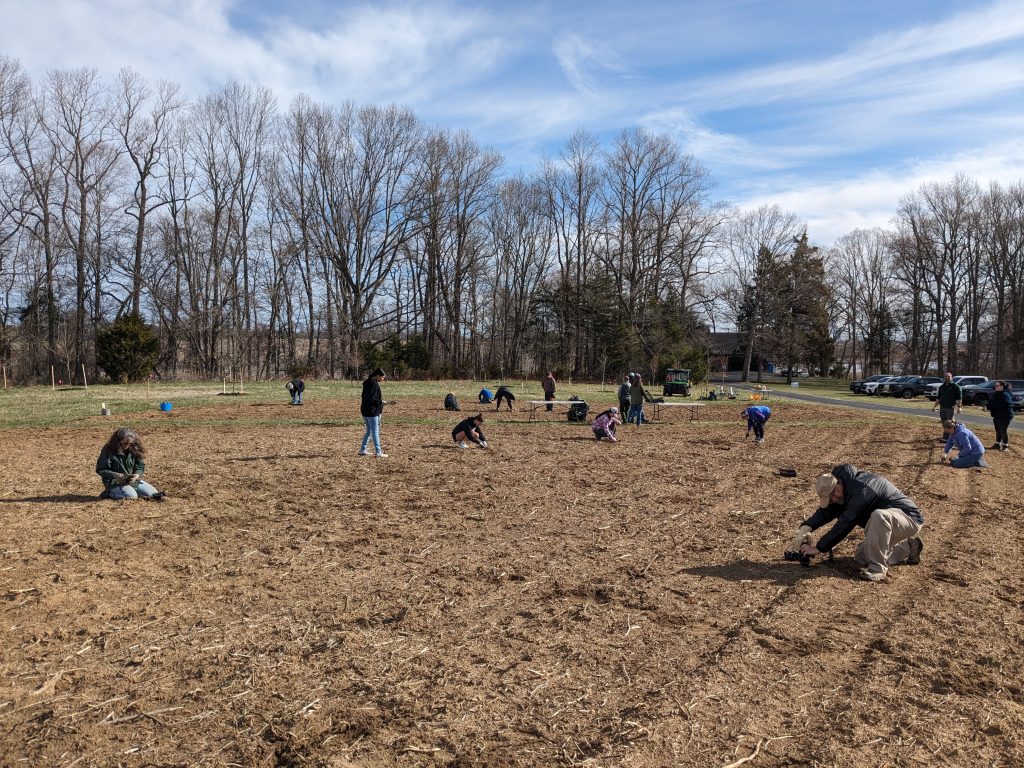
Volunteers from the local community responded to DWL’s call for help to plant flowers and other herbaceous plants in the Hack’s meadow area in the spring of 2025.
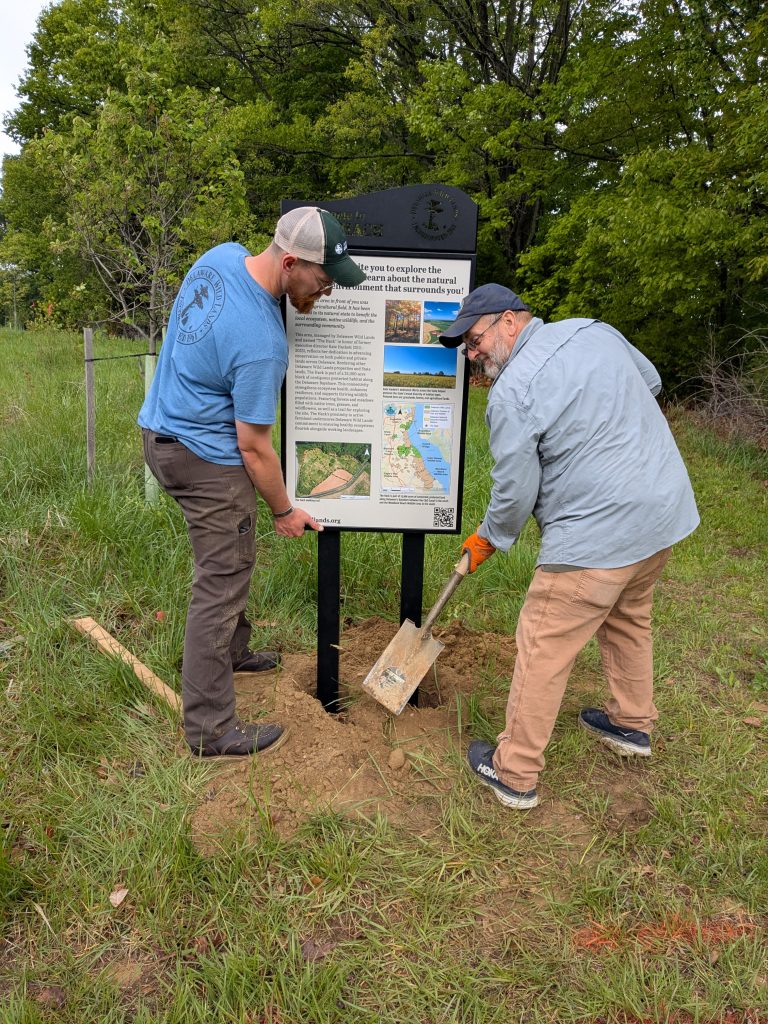
DWL installed the educational signage in The Hack as part of DWL’s education and outreach program. The Hack trail, signs, and educational curriculum will deepen public engagement in conservation, expand DWL’s mission, and nurture the next generation of environmental stewards.